Dr. Gymbro
←

#concurrent training

1 article
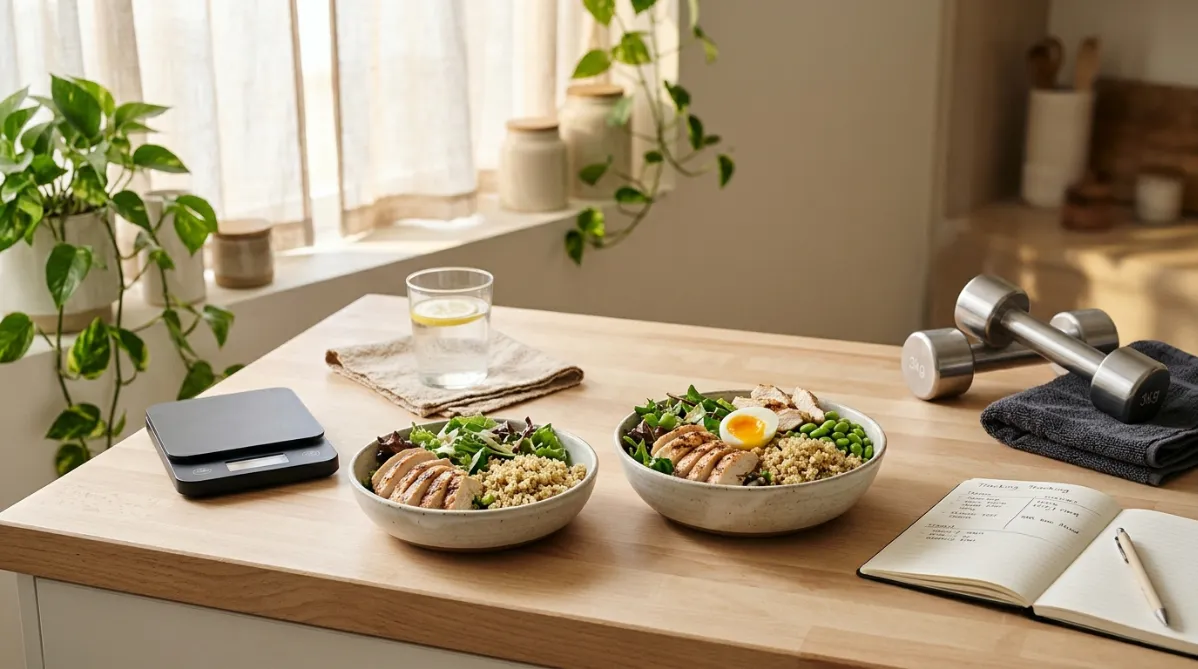
A wide landscape editorial photograph of a clean, sunlit kitchen counter in soft natural morning light, styled like a modern wellness journal cover. In the foreground, two matching ceramic bowls sit side by side on a pale oak butcher block. The left bowl holds a modest portion of sliced grilled chicken breast, quinoa, and greens. The right bowl holds a noticeably larger, double-sized portion of the same ingredients, with extra chicken, a soft-boiled egg, and edamame. The contrast in portion size is clear but elegant. Beside the bowls are a matte black digital kitchen scale, a tall glass of water with a lemon slice, and a small linen napkin in warm oatmeal tone. A pair of sleek brushed-steel dumbbells rests slightly out of focus on the counter's edge, and a folded charcoal gym towel sits next to them. In the soft-focus background, a large window with sheer curtains lets in diffused golden light, and a trailing green pothos plant adds an organic touch. A small, minimal notebook with a pen lies open to the side, suggesting careful tracking. The color palette is muted and cohesive: warm creams, sage green, soft terracotta, charcoal, and natural wood. Shallow depth of field, crisp focus on the bowls, gentle shadows, and subtle film-like grain. Composition follows the rule of thirds with generous negative space on the upper right for headline text. The mood is calm, thoughtful, and trustworthy, like a contemporary health and science magazine feature. There are no people, no text, and no futuristic elements.
nutrition

3.2 g/kg de proteína durante 16 semanas: ¿afectó a los riñones de los levantadores?

BY DR. GYMBRO ·

¿Consumir el doble de proteína que suele ingerir un levantador daña silenciosamente tus riñones? Un ensayo aleatorizado de 16 semanas con 44 hombres entrenados en resistencia comparó 3.2 g/kg de proteína contra 1.6 g/kg. No se hallaron diferencias estadísticamente significativas en los marcadores renales, tanto en los que entrenaban solo como en los que combinaban fuerza con cardio. Sin embargo, los grupos de alta proteína presentaron leves aumentos de BUN y cistatina C y pequeñas caídas del eGFR, que los autores describen solo como resultados descriptivos. Aquí explicamos qué significa, qué no puede aclarar el estudio y a quién le conviene ser precavido.

This page is available in